
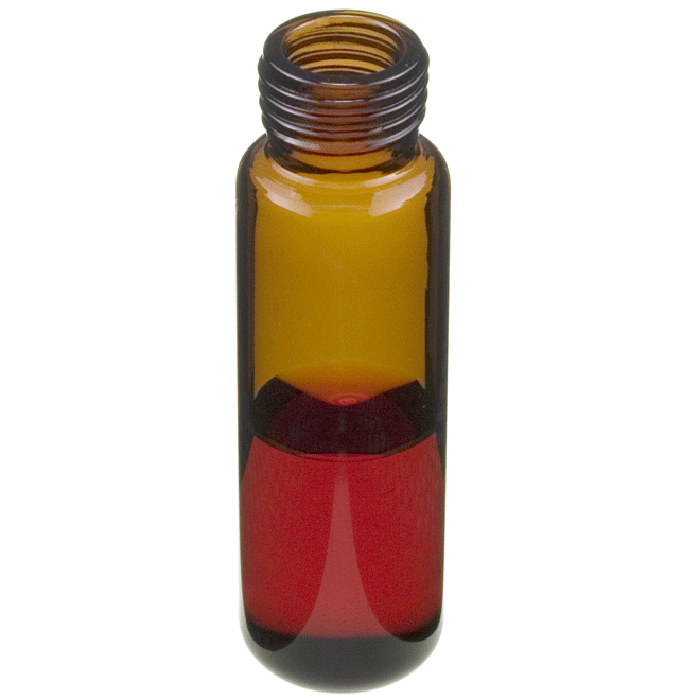
Vials, Headspace, Screw Top, Glass. Amber, 20ml, 18mm precision threads, 22.5x75.5mm outer dimensions, Rounded Bottom. MICROSOLV Brand. 1000/CS.
Additional Information:
The 95020-0AV-K MICROSOLV Headspace Vials are precision‑manufactured 20 mL screw‑top vials supplied in a 1000‑count case, designed for CTC Combi PAL®, PerkinElmer®, Agilent®, and compatible autosamplers.
These vials combine pharmaceutical‑grade amber borosilicate glass with 18 mm precision threads, providing secure sealing, consistent performance, and protection for light‑sensitive analytes in high‑throughput headspace GC and SPME workflows.
Key Features
Bulk Case Format (High Throughput)
1000 vials per case
Reduces ordering frequency and cost per vial
✅ Also available in smaller quantities:
Multi‑Platform Compatibility
Compatible with:
CTC Combi PAL® autosamplers
PerkinElmer® systems
Agilent® autosamplers
Other 18 mm screw‑top systems
⚠️ Not suitable for PerkinElmer TurboMatrix 110® (pre‑2006 models)
Amber Glass (Low Actinic)
Protects light‑sensitive samples
Minimizes UV/visible exposure
20 mL Volume – Maximum Capacity
Ideal for large sample volumes and trace analysis
Supports flexible headspace ratios
18 mm Precision Threads
Ensures secure, consistent screw‑top sealing
Suitable for SPME and repeat injections
Rounded Bottom Design
Promotes uniform heat distribution
Enhances headspace equilibration
Type I Borosilicate Glass (Class A, Type N51A)
Low extractables
High chemical resistance and thermal stability
Closure Requirement
Use with 18 mm screw caps and septa (sold separately)
Specifications
Volume: 20 mL
Closure Type: 18 mm Screw Top (Precision Threads)
Material: Type I Borosilicate Glass (amberized, low actinic)
Color: Amber
Bottom Type: Rounded
Dimensions: 22.5 × 75.5 mm
Compatibility: CTC Combi PAL®, PerkinElmer®, Agilent® autosamplers
Quantity: 1000 / Case
Price: $1,382.39 / Case
Cost: T271.6500
VWR Number: 97054-904
Typical Applications
Headspace GC / GC‑MS, SPME workflows, environmental VOC testing, pharmaceutical QA/QC, food and flavor analysis, and light‑sensitive high‑throughput workflows